
Selecting the best precision model resin is essential for producing highly accurate dental models for crown and bridge work, aligner workflows and verification models in dental labs. Precision model resins must combine high dimensional accuracy, fine detail reproduction and stable handling to support reliable digital workflows.
This article explains which precision model resin is best suited for typical dental lab indications, how it behaves in validated workflows and how it should be combined with printer settings, support strategies and shrinkage considerations. It is intended as a practical buyer guide for labs that produce high accuracy 3D printed dental models in daily production.
- Overview of precision model resin indications and use cases
- Recommended precision model resin for high accuracy dental models
- Key properties such as accuracy, surface quality and dimensional stability
- Integration with printers, calibration and shrinkage control
- Links to detailed instructions and related buyer guides
For a broader overview of all dental resins, see the Dental resins hub. For the complete structure of indication based resin guides, see the Resin Comparison and Buyer Guides sub hub.
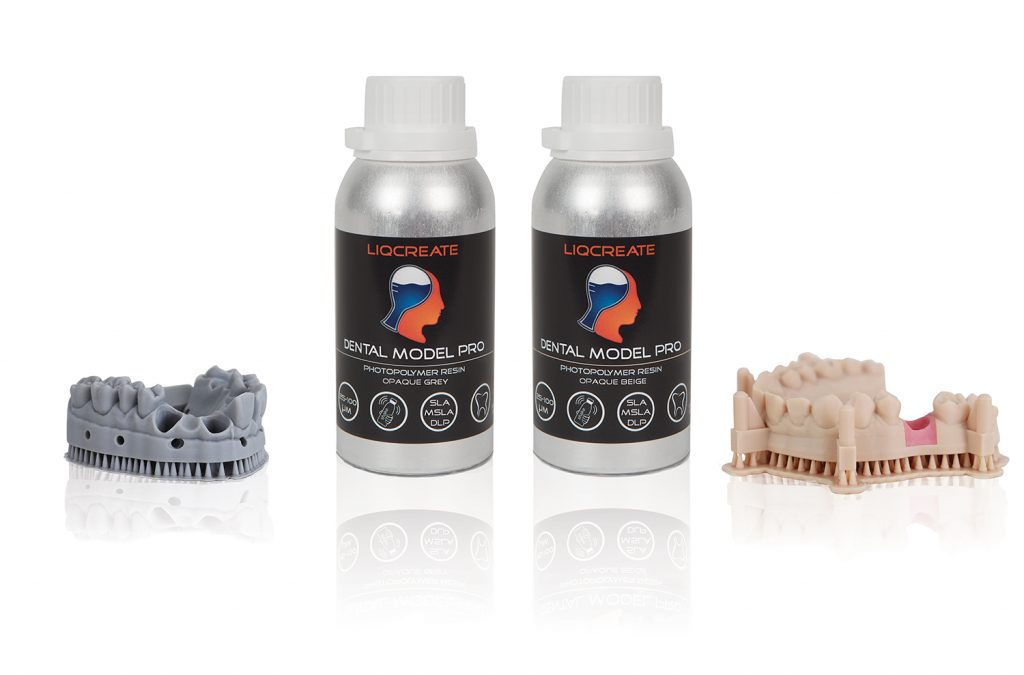
Precision model resin indications and use cases
Precision model resins are used to print highly accurate dental models that support restorative, orthodontic and diagnostic workflows. They are designed to provide fine detail, sharp margins and stable dimensions so that restorations and appliances fabricated on these models fit as intended.
- High accuracy models for crowns, bridges and inlays or onlays.
- Models for clear aligner workflows and orthodontic appliances.
- Verification models and quality control models in digital workflows.
The primary precision model materials in this context are dedicated precision model resins such as Dental Model Pro and Premium Model, developed for high accuracy dental models with fine detail and stable dimensions. For general processing and handling parameters of dental model materials, see the Best Resin for Dental Models article.
Best precision model resin for crown and bridge models
Crown and bridge models require sharp margins, accurate contact areas and stable dies to support precise restorative workflows. The precision model resin must maintain dimensional accuracy from printing through post processing and during repeated handling in the lab.
- Recommended resin: Dental Model Pro, precision model resin for high accuracy crown and bridge models.
- Key reasons: high dimensional accuracy, fine margin reproduction and stable handling for removable dies and segmental models.
- Typical use: models for single crowns, short and long span bridges and complex restorative cases.
For workflows that include scanning, design, printing and finishing of crown and bridge models, see the relevant protocols in the Dental workflows hub.
Best precision model resin for aligner and orthodontic models
Aligner and orthodontic models must be dimensionally accurate and stable under thermoforming conditions. The precision model resin used for these models should provide smooth surfaces, consistent dimensions and sufficient strength to withstand aligner forming and trimming.
- Recommended resin: Premium Model resin validated for aligner and orthodontic model workflows.
- Key reasons: stable dimensions, smooth surface quality and predictable behavior during thermoforming.
- Typical use: aligner models, orthodontic appliance models and staged treatment models.
Key properties of precision model resins for dental labs
When choosing a precision model resin, dental labs should evaluate accuracy, surface quality, dimensional stability and handling. These properties determine how well the printed models support restorative and orthodontic workflows and how predictable the final outcomes will be.
- Accuracy: high dimensional accuracy and reproducibility across builds and printers.
- Surface quality: smooth surfaces and fine detail that support margin readability and appliance fabrication.
- Dimensional stability: stable dimensions from printing through post curing and repeated handling.
- Handling: sufficient strength for sawing, die preparation and model segmentation without chipping.
For resin specific handling notes and post processing parameters, refer to the Dental resin instructions hub.
Accuracy, shrinkage and compensation in precision model workflows
Accuracy and shrinkage behavior are critical in precision model workflows because any dimensional deviation can affect the fit of restorations and appliances. Proper compensation and validation help ensure that printed models represent the digital design within the required tolerances.
- Use validated precision model resins with documented behavior in dental model workflows.
- Validate accuracy using the protocols in the Printer Accuracy and Calibration hub where applicable.
- Coordinate model resin behavior with scanner accuracy and design parameters to achieve the desired final fit.
Integrating precision model resins with printers and workflows
The best precision model resin choice is always made in the context of the available printers, calibration routines and digital workflows. Printer settings, layer thickness, orientation and support strategies all influence surface quality and dimensional behavior of the printed models.
- Confirm that your precision model resin is validated for your dental printer family and model workflows using the Dental 3D printers hub.
- Align printer parameters, support strategies and post processing steps according to validated workflows from the Dental workflows hub.
Recommended precision model resin per dental indication
The list below summarizes the recommended precision model resin choice for typical dental lab indications involving high accuracy 3D printed models.
- Crown and bridge models: Dental Model Pro as primary choice for sharp margins and accurate contacts.
- Aligner and orthodontic models: Premium Model resin validated for thermoforming workflows.
- Verification and quality control models: precision model resin for reproducible, high accuracy reference models.
For general model resin selection across broader indications, see the Best Resin for Dental Models article. For implant specific model applications, refer to Best implant model resin for dental labs. The Best precision model resin for dental labs article is part of the Resin Comparison and Buyer Guides structure. By combining these recommendations with resin specific instructions, validated printer settings and workflow documentation, dental labs can select the most appropriate precision model resin for each indication and build stable, predictable digital model workflows.
Support
Do you need any help with 3D printing our SLA, DLP or LCD resins? We can help you! Just look for the question you have below. If you can’t find it, let us know by contacting us!
