
Selecting the best resin for dental models is essential for achieving accurate, predictable results in crown and bridge work, implant analog models, aligner models and diagnostic cases. Different dental model resins offer variations in color, surface finish, abrasion resistance and dimensional behavior, which directly influence fit, readability of margins and daily lab efficiency.
This article compares the main dental model resins and explains which material is best suited for each indication and workflow. It is intended as a practical buyer guide that connects material choice with validated printer settings, shrinkage behavior and complete dental workflows.
- Overview of dental model resin options and indications
- Recommendations for crown and bridge, implant and aligner models
- Comparison of accuracy, surface quality and handling
- Integration with printer settings and shrinkage compensation
- Links to detailed resin instructions and workflow articles
For a broader overview of all dental resins, see the Dental resins hub. For indication wide comparison across resin families, see the Resin Comparison and Buyer Guides sub hub.
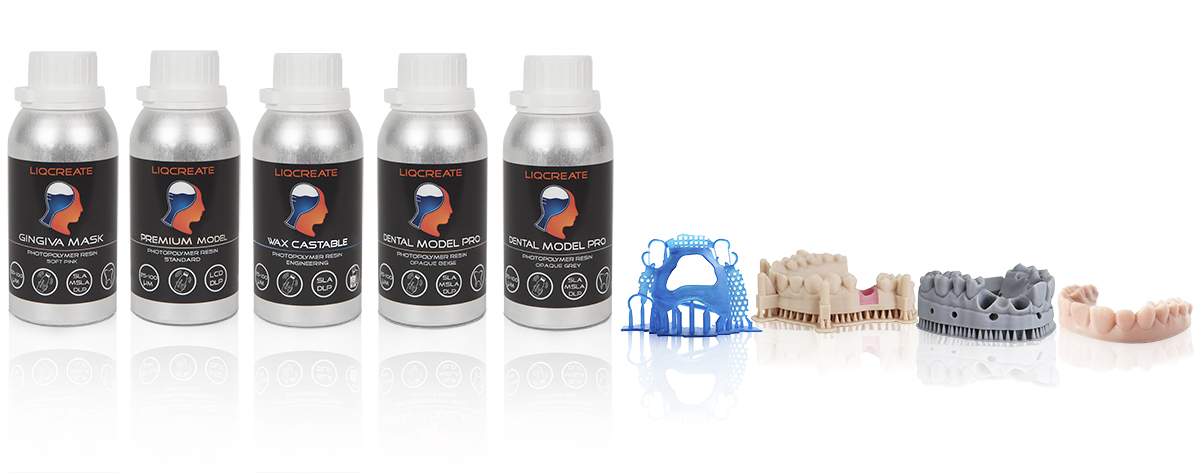
Dental model resin options and indications
Dental model resins are primarily used for crown and bridge models, implant analog models, aligner models and diagnostic models. Within this category, different resins are optimized for specific combinations of accuracy, color and handling.
- Premium Model for aligner models and simple cases where color and surface readability are important.
- Dental Model Pro for high accuracy implant analog models and diagnostic models with demanding fit requirements.
For detailed processing parameters and validated workflows, see the Premium Model instructions and the Dental Model Pro instructions.
Best resin for crown and bridge models
Crown and bridge models require clear margin visibility, stable contacts and reliable articulation. Color and surface finish are important for readability, while dimensional stability is critical for fit.
- Recommended resin: Dental Model Pro Beige or Grey.
- Key reasons: suitable color for margin readability, smooth surface finish and stable behavior in validated workflows.
- Typical use: single units, short span bridges and diagnostic wax up models.
For printer specific exposure settings that support crown and bridge accuracy, see the Dental 3D printers hub and the Printer Accuracy and Calibration hub.
Best resin for implant analog models
Implant analog models place higher demands on accuracy and dimensional stability, especially around analog interfaces and soft tissue areas. Small deviations can affect the fit of frameworks and screw retained restorations.
- Recommended resin: Dental Model Pro.
- Key reasons: high dimensional accuracy, stable behavior in implant workflows and compatibility with gingiva mask materials.
- Typical use: implant analog models with or without removable gingiva masks.
For workflows that combine implant models with gingiva masks, see the relevant protocols in the Dental workflows hub and the gingiva materials in the Dental resins hub.
Best resin for aligner and orthodontic models
Aligner and orthodontic models require consistent surface quality, stable dimensions and sufficient abrasion resistance for thermoforming. Color is less critical than for crown and bridge models, but readability of attachments and fine details remains important. In workflows where acrylic appliances such as retainers or repair acrylics are processed directly on the printed model, non‑stick behavior becomes an additional requirement.
Recommended resins: Premium Model, Dental Model Pro and Separation Model, depending on printer, workflow and appliance requirements.
Premium Model: suitable for general aligner models with good surface finish and readability. Ideal for thermoforming workflows where color and margin visibility support daily lab work.
Dental Model Pro: preferred when higher dimensional accuracy or specific printer validations are required. Recommended for orthodontic cases with tight fit requirements or when attachment geometry must be reproduced with maximum consistency.
Separation Model: recommended for orthodontic and appliance workflows that involve PMMA or cold‑cure acrylic processing directly on the printed model. The non‑stick surface prevents bonding between the printed model and acrylic, enabling clean removal of retainers, splints and repair appliances without the need for a separating agent.
For shrinkage behavior and compensation strategies in aligner workflows, see the Shrinkage Science hub and the Shrinkage Compensation Database.
Accuracy and shrinkage behavior of model resins
Accuracy and shrinkage behavior are key factors when choosing a model resin. Even small dimensional changes can affect fit, especially in implant and multi unit cases. Each resin has a characteristic shrinkage profile that must be combined with appropriate printer settings and compensation values.
- Use the shrinkage values and compensation factors documented for each resin and printer combination.
- Validate accuracy using the protocols in the Printer Accuracy and Calibration hub.
- Apply consistent washing and curing procedures to avoid additional deformation.
For detailed shrinkage data, see the Shrinkage Compensation Database. For washing and curing recommendations that support accuracy, see How to wash and cure dental resins for accuracy.
Surface quality, color and handling
Beyond accuracy, surface quality, color and handling influence daily lab work. The choice between Premium Model and Dental Model Pro can also be guided by how technicians prefer to see margins, contacts and occlusal surfaces.
- Premium Model: focus on color and surface readability for crown and bridge and aligner models.
- Dental Model Pro: focus on high accuracy and stable surfaces for implant and diagnostic models.
- Both resins integrate with standard washing and curing workflows described in the dental processing articles.
For resin specific handling notes and post processing parameters, refer to the Dental resin instructions hub.
Integrating resin choice with printers and workflows
The best resin for dental models is always selected in the context of the available printers and workflows. A resin that performs well on one printer may require different settings on another, and workflows for crown and bridge, implant and aligner models can have different accuracy requirements.
- Confirm that your chosen resin is validated for your printer family.
- Use the recommended exposure settings from the Dental 3D printers hub.
- Combine resin choice with shrinkage compensation and post processing protocols.
For printer specific information, see the Dental 3D printers hub and the Printer Accuracy and Calibration hub. For complete workflows that include model production, see the Dental workflows hub.
Summary of best resin choices for dental models
The table below summarizes the recommended resin choice per main dental model indication.
- Crown and bridge models: Premium Model as primary choice.
- Implant analog models: Dental Model Pro as primary choice.
- Aligner and orthodontic models: Premium Model or Dental Model Pro depending on printer validation and accuracy requirements.
- Diagnostic models: Dental Model Pro when higher dimensional stability is required.
For indication wide comparison of model resins, see the Dental model resin comparison guide.
The Best Resin for Dental Models article is part of the Resin Comparison and Buyer Guides structure. By combining these recommendations with resin specific instructions, validated printer settings, shrinkage data and workflow documentation, dental labs can select the most appropriate model resin for each indication and build stable, predictable digital dentistry workflows.
Support
Do you need any help with 3D printing our SLA, DLP or LCD resins? We can help you! Just look for the question you have below. If you can’t find it, let us know by contacting us!
