
Choosing the right dental resin is one of the most important decisions in any dental 3D printing workflow. Each resin behaves differently in terms of accuracy, mechanical strength, surface quality and post‑processing stability. Selecting the correct material ensures predictable outcomes for restorative, orthodontic and implant applications, while reducing remakes and improving workflow efficiency.
This guide provides a structured decision framework for dental labs. It explains how to evaluate resin properties, how to match materials to specific indications and how to ensure compatibility with printers, calibration routines and validated workflows. It is designed for labs that require consistent, high‑accuracy results across multiple dental applications.
- How to evaluate dental resin performance
- Which resin to choose per dental indication
- Accuracy, stability and workflow considerations
- Printer compatibility and calibration requirements
- Links to detailed resin guides and validated workflows
For a complete overview of all dental resins, visit the Dental resins overview. For indication‑based resin selection, see the Resin Comparison and Buyer Guides.
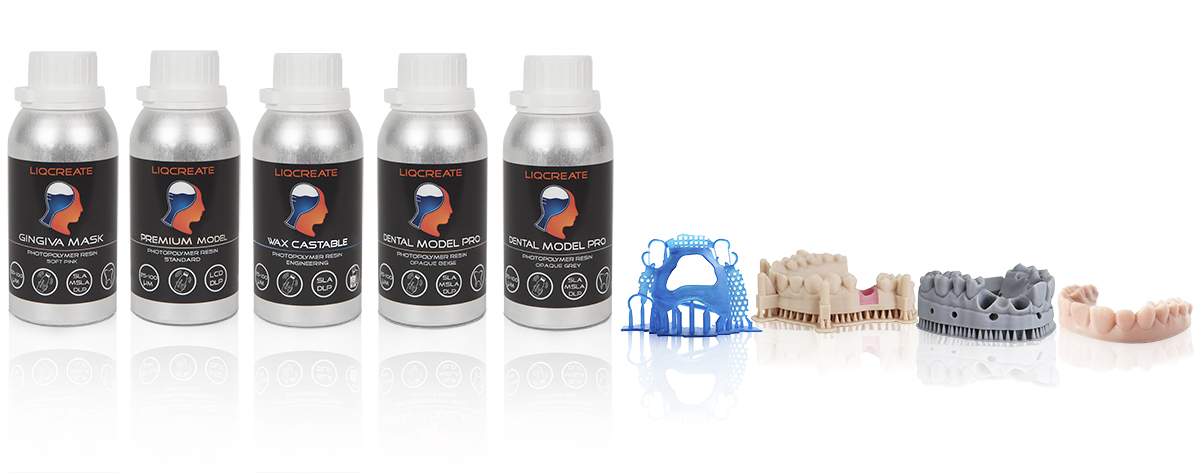
How to evaluate dental resin performance
Dental resins differ significantly in how they behave during printing, washing, curing and long‑term handling. Evaluating the right properties ensures that the material matches the accuracy and strength requirements of each workflow.
- Dimensional accuracy: the ability to reproduce margins, contacts and analog interfaces within tight tolerances.
- Mechanical strength: resistance to deformation during sawing, thermoforming or analog insertion.
- Surface quality: smoothness and detail reproduction for restorative margins, orthodontic anatomy or implant interfaces.
- Post‑processing stability: predictable behavior during washing, curing and repeated handling.
- Workflow compatibility: alignment with validated printer settings, layer thickness and curing requirements.
For resin‑specific handling and post‑processing parameters, refer to the Dental resin instructions page.
Choosing the right resin per dental indication
Each dental indication requires a resin with specific performance characteristics. Selecting the correct material ensures predictable outcomes and reduces remakes. Below is a structured decision guide based on common dental lab workflows.
- Dental models: choose high‑accuracy model resins for restorative and orthodontic workflows. See Best Resin for Dental Models.
- Precision models: use precision model resins for crown and bridge margins, fine detail and removable dies. See Best precision model resin for dental labs.
- Implant models: select implant model resins with stable analog fit and strong mechanical behavior. See Best implant model resin for dental labs.
- Gingiva masks: use flexible gingiva resins for soft‑tissue simulation around implant and restorative models.
- Castable resins: choose castable materials for frameworks, partials and burnout‑based workflows.
- Tray resins: use rigid tray materials for custom impression trays and functional impression workflows.
Scenario‑based resin selection
Different labs have different priorities. The best resin choice depends on the workflow environment, accuracy requirements and production volume.
- Restorative‑focused labs: prioritize precision model resins for margin clarity and die stability.
- Orthodontic labs: prioritize model resins with smooth surfaces and predictable thermoforming behavior.
- Implant‑focused labs: prioritize implant model resins with stable analog seating and high mechanical strength.
- High‑volume labs: prioritize resins with consistent curing behavior and low variance across builds.
Accuracy, calibration and workflow compatibility
Even the best resin cannot perform correctly without proper calibration and workflow validation. Accuracy is influenced by resin behavior, printer exposure, layer thickness and curing conditions.
- Validate accuracy using the Printer Accuracy and Calibration overview.
- Use validated workflows for scanning, design, printing and curing from the Dental workflows article.
- Match resin behavior with printer capabilities, build plate size and support strategies.
Printer compatibility and resin validation
Not all resins behave the same across different printers. Always confirm compatibility with your specific printer family and workflow.
- Check resin validation for your printer in the Dental 3D printers overview.
- Use recommended exposure settings and support strategies for each resin.
- Ensure post‑processing steps match the resin’s curing requirements.
Summary: how to choose the right dental resin
Choosing the right dental resin depends on indication, accuracy requirements, mechanical behavior and workflow compatibility. By combining resin‑specific instructions, validated printer settings and calibration routines, dental labs can build predictable and efficient 3D printing workflows.
For broader model resin selection, see the Best Resin for Dental Models article. For precision model applications, refer to the Best precision model resin for dental labs. This article is part of the Resin Comparison and Buyer Guides structure.
Support
Do you need any help with 3D printing our SLA, DLP or LCD resins? We can help you! Just look for the question you have below. If you can’t find it, let us know by contacting us!
