
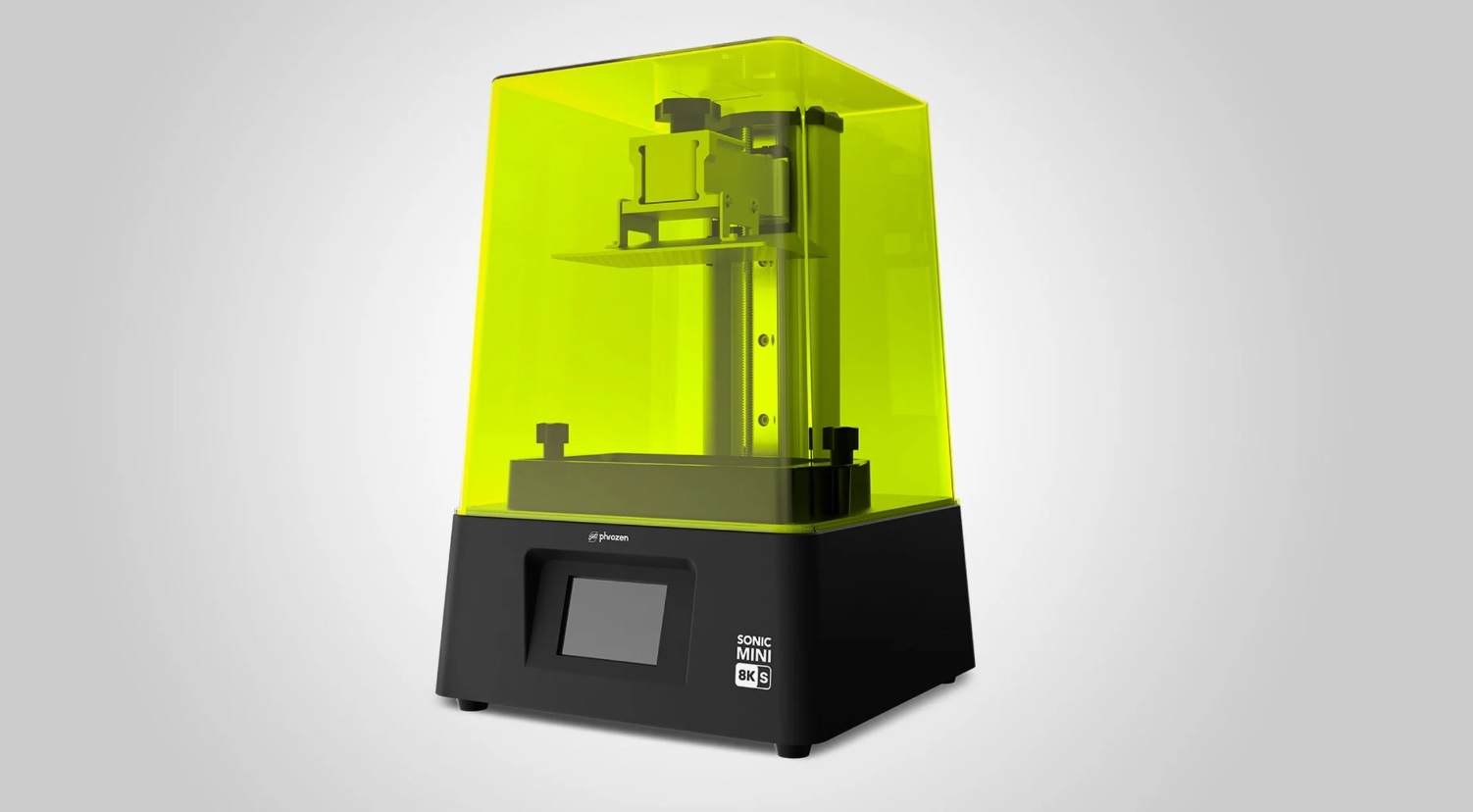
The Phrozen Sonic Mini 8K operates in a segment where ultra‑high‑resolution MSLA printers are becoming increasingly common, and several manufacturers position their systems as alternatives for users who require fine surface detail and predictable workflow behavior. While the Mini 8K focuses on extreme pixel density and micro‑texture reproduction, competing models approach this performance through different combinations of optical design, mechanical rigidity and build volume. Understanding these systems provides context for how the Mini 8K fits within the broader landscape of compact high‑resolution resin printers.
Elegoo Saturn 3 Ultra as a medium‑format alternative
One of the most visible competitors is the Elegoo Saturn 3 Ultra, a printer that prioritizes build volume and mechanical stability over maximum XY resolution. Its 12K LCD offers a larger print area with a slightly coarser pixel pitch, making it suitable for users who value size and throughput. The Saturn 3 Ultra’s reinforced Z‑axis and high‑output light engine support consistent curing behavior, although its optical uniformity differs from the tightly focused projection used in the Phrozen Sonic Mini 8K. This makes the Saturn 3 Ultra a strong option for larger models, but less specialized in micro‑detail reproduction.
Anycubic Photon Mono M5s for automated calibration
Another relevant competitor is the Anycubic Photon Mono M5s, which targets the same high‑detail segment with a 12K LCD and a workflow centered around automated calibration and print‑failure detection. Its optical system is optimized for general‑purpose resin printing, offering high clarity without the extreme micro‑texture fidelity of the Mini 8K. The M5s appeals to users who prefer automation and simplified setup, whereas the Mini 8K remains the more detail‑oriented platform for miniature, dental and precision‑focused applications.
Creality Halot‑Mage Pro for high‑speed production
For users who require a balance between resolution and mechanical rigidity, the Creality Halot‑Mage Pro presents a competitive option. Its 10‑inch 8K LCD provides a larger build area supported by a high‑intensity light engine designed for fast curing. The Halot‑Mage Pro is positioned as a high‑throughput system, making it attractive for batch production and rapid prototyping. While its surface fidelity is strong, it does not match the micro‑detail achievable on the Mini 8K, which remains optimized for fine textures and small geometric features.
Compact alternatives in the entry‑level segment
In the compact category, printers such as the Anycubic Photon Mono 2 and the Elegoo Mars 4 Ultra offer solid performance at lower resolutions. These systems are not direct competitors in terms of pixel density, but they occupy the same physical footprint and appeal to users who prioritize affordability and general‑purpose resin workflows. Their optical engines and mechanical structures are designed for reliability rather than the precision‑oriented applications targeted by the Mini‑series.
Professional‑grade competitors with different priorities
Within the professional segment, the Nexa3D XiP stands out as a high‑speed LSPc system that competes on throughput rather than resolution. Although its pixel pitch is larger than that of the Mini 8K, the XiP’s rigid mechanics and uniform light engine deliver consistent dimensional accuracy across the build plate. It is positioned for engineering and dental environments where workflow efficiency and material versatility outweigh the need for extreme micro‑detail.
Position of the Phrozen Sonic Mini 8K within the competitive landscape
Taken together, these competitor models illustrate the range of priorities within the high‑resolution resin market. The Phrozen Sonic Mini 8K remains one of the most detail‑focused printers in its class, while alternatives differentiate themselves through build volume, mechanical rigidity, automation features or production speed. Users selecting between these systems should consider whether their primary requirement is micro‑texture reproduction, workflow efficiency, print size or material behavior, as each printer excels in a different aspect of the MSLA landscape.
Support
Do you need any help with 3D printing our SLA, DLP or LCD resins? We can help you! Just look for the question you have below. If you can’t find it, let us know by contacting us!
