
The Dental Resin Buyer’s Guide 2026 provides a structured overview of how dental labs can select the correct resin for each indication. Dental resins differ in accuracy, mechanical strength, surface behavior and workflow compatibility. Choosing the right material ensures predictable results across restorative, orthodontic and implant applications.
This guide summarizes the key resin categories, their typical use cases and the decision criteria that determine which resin is most suitable for each workflow. It is designed for labs that require consistent, high accuracy performance across multiple printer platforms.
- Overview of dental resin categories
- How to select the right resin per indication
- Accuracy, stability and workflow considerations
- Printer validation and calibration requirements
- Links to detailed resin guides and workflow documentation
For a complete overview of all dental resins, visit the Dental resins overview. For indication based resin selection, see the Resin Comparison and Buyer Guides.
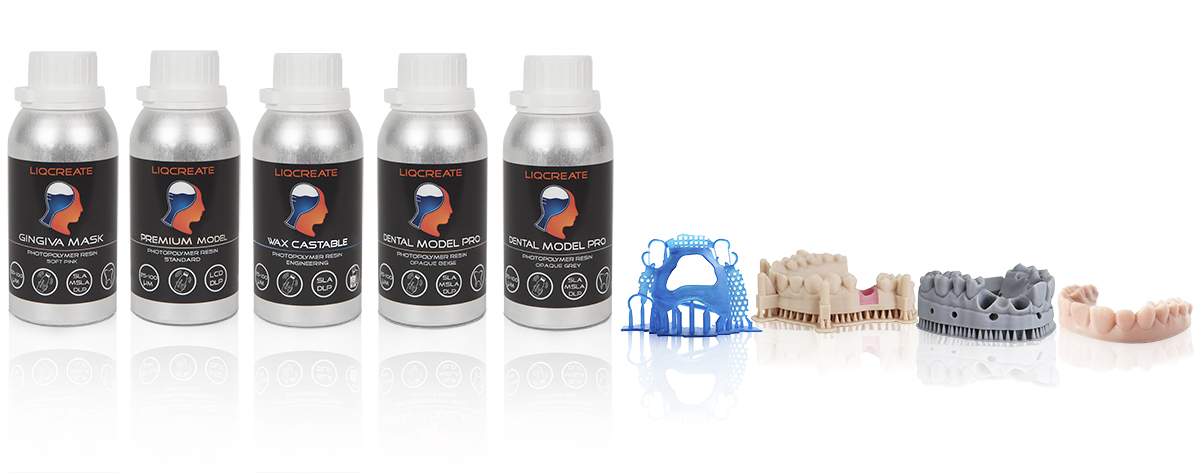
Dental resin categories and their applications
Each resin category is designed for a specific set of dental workflows. Understanding the differences helps labs select the correct material for each case.
- Model resins: used for restorative and orthodontic models requiring stable dimensions. See Best Resin for Dental Models.
- Precision model resins: designed for crown and bridge margins, removable dies and fine detail. See Best precision model resin for dental labs.
- Implant model resins: optimized for analog fit, mechanical strength and implant verification. See Best implant model resin for dental labs.
- Gingiva mask resins: flexible materials for soft tissue simulation around implant and restorative models.
- Castable resins: used for frameworks, partials and burnout workflows.
- Tray resins: rigid materials for custom impression trays and functional impression workflows.
How to choose the right resin per dental indication
Choosing the correct resin depends on the accuracy requirements, mechanical behavior and workflow steps involved in each indication. The decision framework below summarizes the most common selection criteria.
- Restorative models: prioritize accuracy, surface quality and dimensional stability.
- Crown and bridge work: prioritize precision model resins with sharp margin reproduction.
- Implant workflows: prioritize implant model resins with stable analog seating and strong mechanical behavior.
- Orthodontic models: prioritize smooth surfaces and predictable thermoforming behavior.
- Soft tissue simulation: use flexible gingiva mask materials.
- Burnout applications: use castable resins with clean burnout behavior.
Accuracy, stability and workflow considerations
Accuracy and stability are critical in dental 3D printing. Resin behavior must align with printer exposure, layer thickness and curing conditions to achieve predictable results.
- Use validated workflows from the Dental workflows page.
- Match resin behavior with printer capabilities and build plate size.
- Ensure consistent washing and curing to maintain dimensional stability.
Printer validation and calibration
Resin performance depends on proper printer calibration and validation. Even high accuracy resins require correct exposure settings and workflow alignment.
- Validate accuracy using the Printer Accuracy and Calibration overview.
- Confirm resin compatibility with your printer family in the Dental 3D printers article.
- Use resin specific exposure settings and support strategies.
The right dental resin depends on indication, accuracy requirements, mechanical behavior and workflow compatibility. By combining resin specific instructions, validated printer settings and calibration routines, dental labs can build predictable and efficient 3D printing workflows.
For broader model resin selection, see the Best Resin for Dental Models article. For precision model applications, refer to the Best precision model resin for dental labs. This article is part of the Resin Comparison and Buyer Guides structure.
Support
Do you need any help with 3D printing our SLA, DLP or LCD resins? We can help you! Just look for the question you have below. If you can’t find it, let us know by contacting us!
