
Peel forces are one of the most influential mechanical factors in MSLA resin printing, and they play a decisive role in whether a print succeeds or fails on any Elegoo Mars printer. Every time the build plate lifts after curing a layer, the model must separate from the FEP or ACF film. This separation creates mechanical stress that travels through the supports and into the model. If the peel force is too high, the model may flex, detach, or deform. If the peel force is too low, layers may not separate cleanly, leading to sticking, tearing, or surface defects. Understanding how peel forces behave on the Mars‑series is essential for achieving stable, predictable results across different resins, geometries, and printer generations.
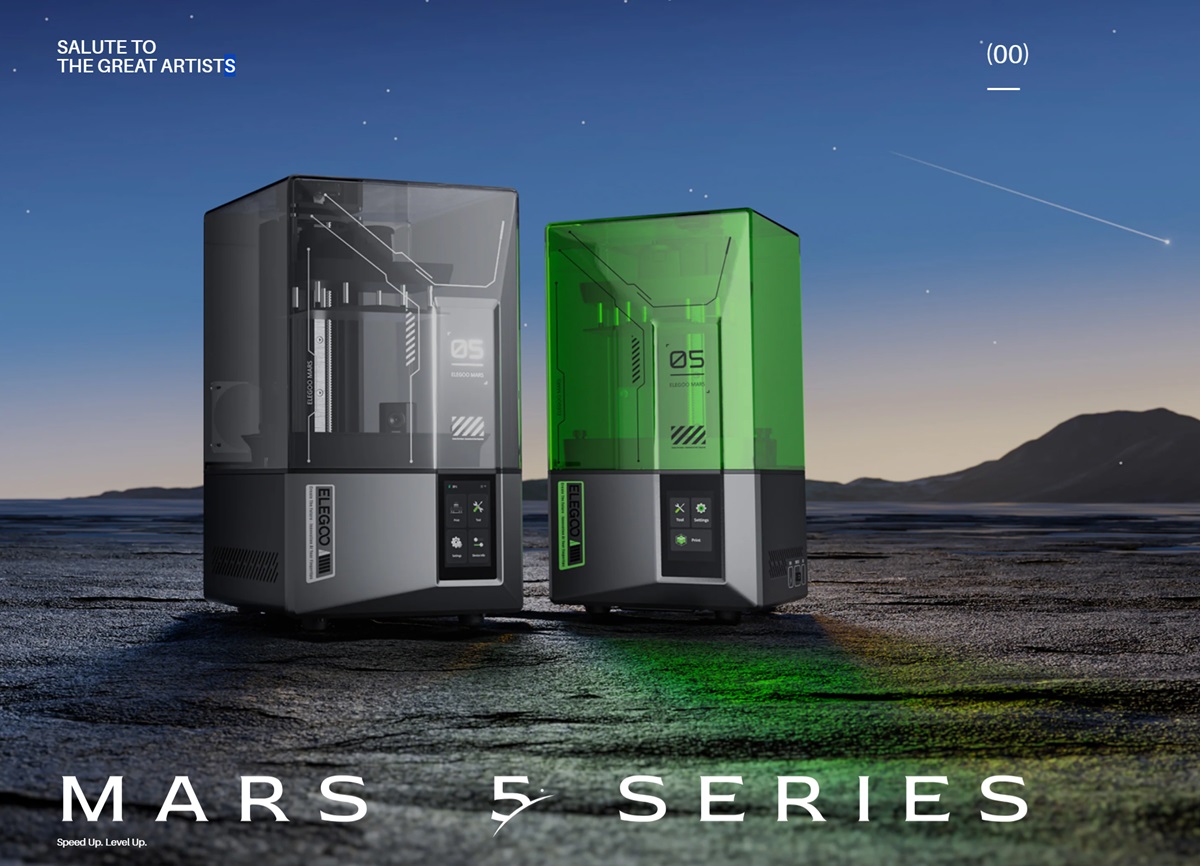
How peel forces are generated in MSLA printing
Peel forces arise from the adhesion between the cured resin layer and the film at the bottom of the vat. When the build plate lifts, the cured layer must detach from this surface. The strength of this adhesion depends on several factors, including the resin’s viscosity, the curing footprint, the exposure energy, and the surface tension between the resin and the film. On Elegoo Mars printers, the combination of LCD resolution, irradiance, and lift mechanics determines how sharply and how quickly this separation occurs. A larger cured area produces higher peel forces, while a smaller cross‑section reduces the stress on the model.
Differences in peel behavior across the Mars‑series
Each Mars printer handles peel forces differently due to variations in light engines, pixel density, and mechanical design. Older models with lower irradiance produce softer curing boundaries, which can reduce peak peel forces but increase the risk of flexing during separation. Newer models such as the Mars 4 Ultra and Mars 5 Ultra cure with higher intensity and sharper voxel edges, resulting in more rigid layers that resist deformation but also experience stronger peel forces. These differences influence how supports must be placed, how models should be oriented, and how resin behavior affects print stability.
The role of cured surface area in peel force intensity
The size of the cross‑section being cured in each layer is the primary driver of peel force magnitude. Large flat surfaces create strong adhesion to the film, requiring more force to separate. This can cause the model to bend or shift, especially if the supports are not evenly distributed. Tilting the model reduces the cross‑sectional area per layer, lowering peel forces and improving stability. This is why angled orientations are standard practice in MSLA printing, particularly on high‑resolution Mars printers where cured layers are more rigid and less forgiving.
How resin properties influence peel behavior
Resin viscosity, elasticity, and curing characteristics all affect how peel forces propagate through the model. Thicker resins create stronger adhesion to the film, increasing the force required to separate each layer. Highly rigid engineering and dental resins transfer peel forces more directly into the supports, making them more sensitive to sudden stress changes. Standard resins absorb some of the peel shock due to their flexibility, but they can also stretch or deform if the forces are too high. Matching resin behavior to the printer’s mechanical characteristics is essential for consistent results.
Support structures as the primary buffer for peel forces
Supports act as the mechanical interface between the model and the build plate, absorbing and distributing peel forces during lifting. If supports are too thin, they may flex excessively or buckle under load. If they are too thick, they may transfer too much force directly into the model, causing fractures or surface defects. The ideal support configuration depends on the printer’s irradiance, the resin’s stiffness, and the geometry of the model. On high‑resolution Mars printers, supports must be placed more strategically because the cured layers are more rigid and less tolerant of sudden stress.
The influence of lift speed and motion profile
Lift speed determines how quickly peel forces are applied. A fast lift can create a sudden spike in force, increasing the risk of detachment or deformation. A slower lift spreads the force over a longer period, reducing peak stress but increasing print time. Elegoo Mars printers use different lift profiles depending on the model and firmware version, which affects how supports must be designed. Printers with larger build areas or stronger light engines benefit from slower, more controlled lift speeds to maintain stability during peeling.
Suction forces as a secondary contributor to peel stress
In addition to adhesion, suction forces can significantly increase the load on the model during peeling. Deep cavities, concave surfaces, and enclosed geometries trap resin and create vacuum effects as the model lifts. These forces can exceed the strength of the supports, causing sudden detachment or layer shifts. Breaking up large suction zones through orientation, venting, or strategic support placement helps reduce these effects. Mars printers with faster lift speeds are particularly sensitive to suction‑related failures.
Achieving stable peel behavior on the Mars platform
Stable peel behavior requires a combination of correct orientation, balanced support distribution, appropriate resin selection, and controlled lift mechanics. By understanding how peel forces are generated and how they interact with the mechanical and optical characteristics of Elegoo Mars printers, users can design prints that withstand the stresses of the peel cycle. This leads to more predictable results, fewer failures, and higher overall print quality across all Mars‑series models.
Support
Do you need any help with 3D printing our SLA, DLP or LCD resins? We can help you! Just look for the question you have below. If you can’t find it, let us know by contacting us!
