
Elegoo has been producing MSLA resin 3D‑printers since 2017, starting with the original Mars. Since then, both the Mars‑series and Saturn‑series have evolved significantly. Early 2K RGB printers have been replaced by modern 4K, 8K and 9K monochrome LCD systems with higher optical efficiency, faster curing behavior and improved mechanical stability. These developments have made Elegoo printers highly compatible with Liqcreate’s engineering, dental and general‑purpose resins.
The first Mars models relied on RGB LCD screens, which transmitted less light and required longer exposure times. With the introduction of the Mars 2, Mars 2 Pro and later the Mars 3 and Mars 4 generations, Elegoo transitioned to monochrome LCD technology. These screens allow more light to pass through, cure resin faster and maintain a more stable irradiance profile over time. The Saturn‑series builds on this foundation with larger LCD panels, a stiffer dual‑rail Z‑axis and improved uniformity across the entire build area, making it suitable for larger parts and small‑batch production.
For users working with Liqcreate resins, this means that all modern Elegoo printers (from compact Mars models to large‑format Saturn systems) can process our materials reliably. The curing behavior, however, differs between LCD generations. Engineering resins benefit from the higher light output of monochrome screens, while dental and miniature‑focused resins take advantage of the smaller pixel sizes found on the Mars 3, Mars 4 and Saturn 3 platforms. Older RGB‑based printers can still be used, but exposure times will be noticeably longer and the margin for error is smaller.
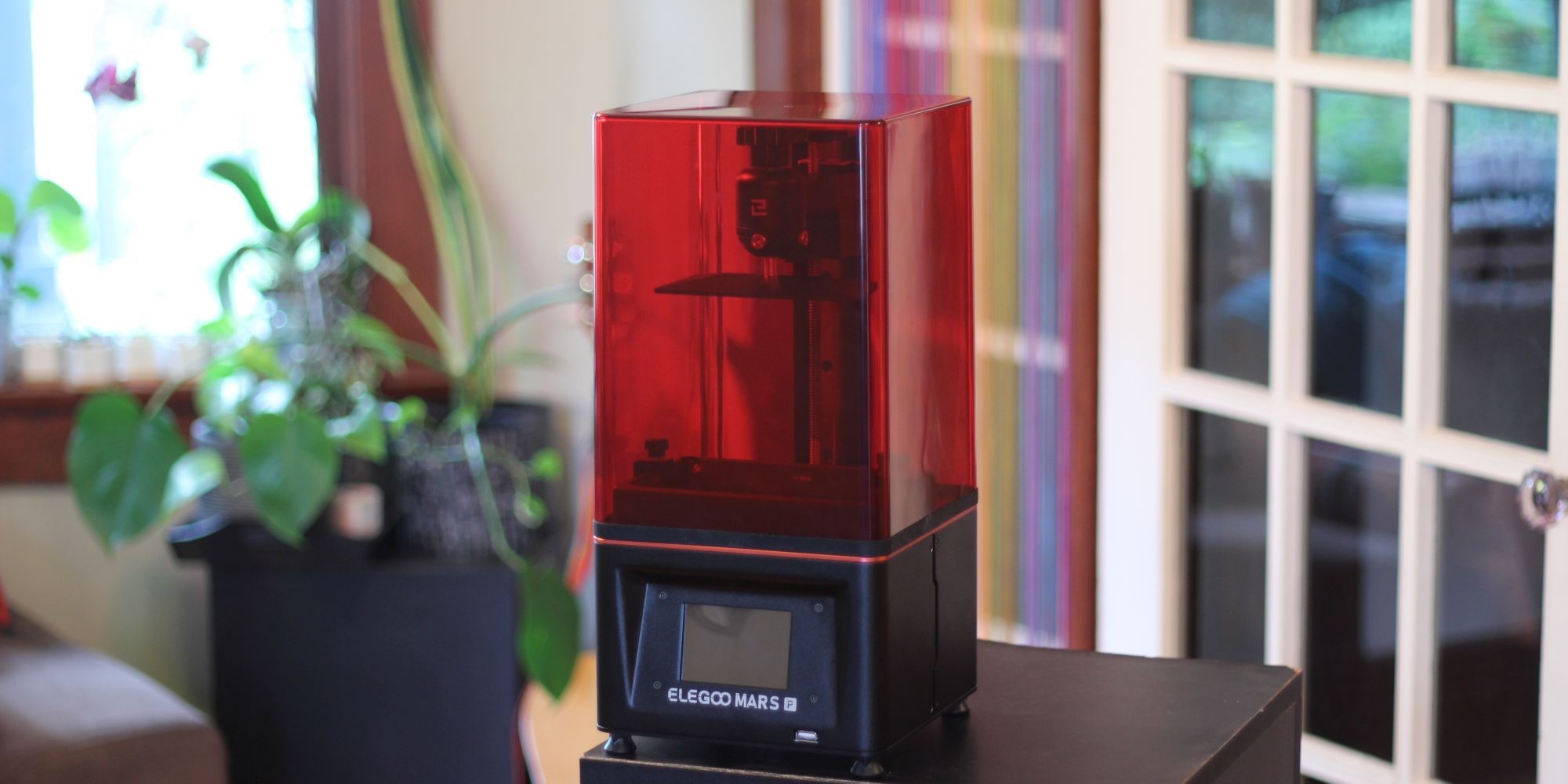
Source picture: Astro Panama Elegoo Mars Pro review.
Elegoo Mars vs Elegoo Saturn: what changes for Liqcreate resins
The Mars‑series is designed for compact, high‑detail applications. Its smaller build volume and shorter optical path make it ideal for dental arches, miniatures and precision prototypes. The Saturn‑series offers a larger build area and a more rigid Z‑axis, which improves stability when printing taller parts or multiple components simultaneously. Both series support third‑party resins without restrictions, and Liqcreate materials have been validated across all major Elegoo models.
When switching between Mars and Saturn printers, the most noticeable differences are the exposure window and the uniformity of curing across the LCD. Larger screens require more consistent optical performance, and the Saturn‑series handles this well due to its improved light engine and mechanical stiffness. Users printing engineering parts or larger dental models will benefit from the Saturn’s increased build volume, while users focused on fine detail may prefer the Mars 3 or Mars 4 Ultra due to their smaller pixel size.
How Liqcreate resins behave on Elegoo printers
Liqcreate resins are formulated to perform consistently across different MSLA platforms, but each printer class influences the curing behavior. Monochrome LCD printers deliver faster and more predictable curing, especially with engineering‑grade materials. Dental model resins and general‑purpose resins also benefit from the improved optical efficiency, resulting in sharper edges, smoother surfaces and more reliable first‑layer adhesion.
Users transitioning from RGB printers to monochrome systems will immediately notice shorter exposure times and a wider processing window. This makes the workflow more forgiving and reduces the risk of over‑curing or dimensional drift. On high‑resolution printers such as the Mars 4 Ultra or Saturn 3, Liqcreate resins can reproduce extremely fine details due to the smaller pixel size and improved optical uniformity.
Workflow recommendations for stable results
Working with Liqcreate resins on Elegoo printers is straightforward when the correct workflow is followed. Proper build‑plate calibration is essential, as incorrect Z‑zero alignment remains the most common cause of adhesion issues. Resin should always be mixed before printing to ensure pigment and filler distribution. Maintaining a stable room temperature between 20–25°C improves curing consistency, especially for engineering materials. Finally, using the validated exposure parameters for each specific Elegoo model ensures predictable results and minimizes the need for manual tuning.
Support and validated settings
Liqcreate engineers continuously test our resins on Elegoo Mars and Saturn printers to ensure reliable performance across all supported models. Exposure settings are validated per printer type, LCD generation and pixel class. For the latest parameters, troubleshooting support or application‑specific guidance, visit the Elegoo Mars resin settings database or contact our engineering team at info@liqcreate.com.
FAQ
Are Liqcreate resins compatible with all Elegoo Mars and Saturn printers? Yes. All modern Elegoo Mars and Saturn printers support third‑party resins, and Liqcreate materials are validated across all major models.
Do monochrome LCD printers improve curing behavior with Liqcreate resins? Monochrome LCD systems provide higher light output and more stable irradiance, resulting in faster and more predictable curing.
Do I need different exposure settings for Mars and Saturn printers? Yes. Differences in LCD size, pixel class and optical uniformity require model‑specific exposure parameters.
Support
Do you need any help with 3D printing our SLA, DLP or LCD resins? We can help you! Just look for the question you have below. If you can’t find it, let us know by contacting us!
