
Dental resin accuracy describes how closely a printed part matches the intended geometry from the scan and CAD design. It includes both trueness and precision, which together determine how reliably a material can reproduce clinically relevant features such as margins, proximal contacts and implant interfaces. Accuracy is driven by resin formulation, polymerization kinetics, curing depth, optical absorption, scattering behavior and the resin’s dimensional stability during and after curing.
These scientific mechanisms influence how a resin forms layers, how internal stresses develop during polymerization and how well the material maintains its geometry once fully cured. Differences in filler content, viscosity, crosslink density and optical properties create distinct accuracy profiles across resin categories, making material selection a critical step in restorative, orthodontic and implant workflows.
This article is part of the Resin Science and Accuracy structure and focuses exclusively on the material‑science factors that determine accuracy. For a complete overview of all dental resins, visit the Dental resins overview. For indication‑based resin selection, see the Resin Comparison and Buyer Guides.
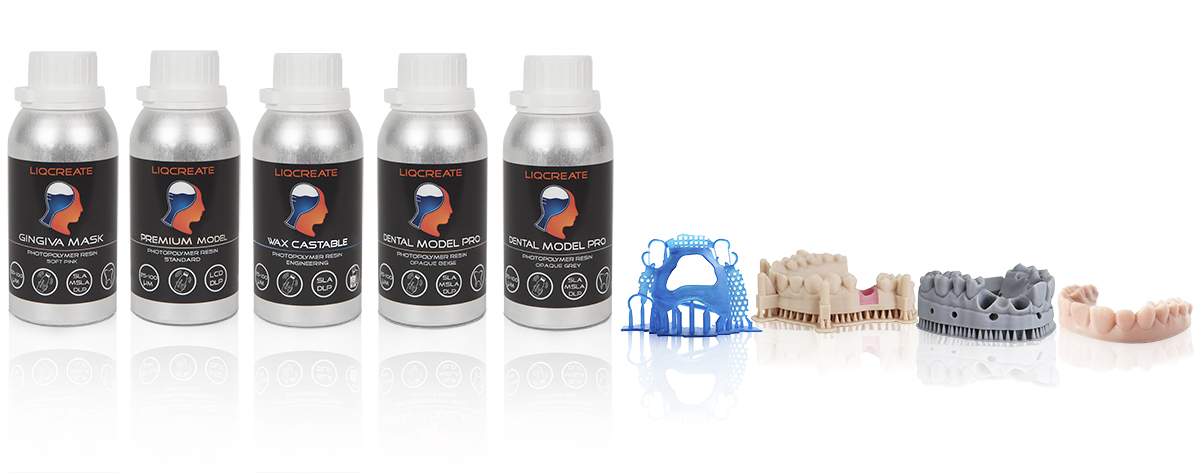
What accuracy means in dental 3D printing
Accuracy consists of two components: trueness and precision. Trueness describes how close the printed part is to the intended geometry. Precision describes how consistent repeated prints are under identical conditions. Both depend heavily on resin behavior during polymerization and post curing.
Accuracy is not defined by printer hardware alone. Resin chemistry, curing depth, shrinkage and optical absorption all influence how the material forms layers and stabilizes after exposure.
Polymerization behavior and dimensional stability
During polymerization, monomers convert into a crosslinked polymer network. This chemical reaction influences dimensional stability in several ways:
- Polymerization kinetics: fast or uneven curing can cause localized distortion.
- Curing depth: deeper curing improves stability but may reduce fine detail accuracy.
- Crosslink density: higher density improves stiffness but may increase shrinkage forces.
For resin‑specific curing parameters, refer to the Dental resin instructions page.
Shrinkage and its impact on accuracy
Shrinkage occurs when the resin contracts during polymerization. Even small dimensional changes can affect margins, contacts and implant interfaces. Shrinkage behavior varies between resin types and is influenced by filler content, exposure characteristics and post curing.
For a detailed explanation of shrinkage mechanisms, see the Resin Shrinkage article in the Resin Science and Accuracy overview.
Optical properties and detail reproduction
Optical behavior determines how light penetrates and cures the resin. Light absorption, scattering and pigment concentration influence curing depth, edge sharpness and fine detail accuracy. Resins with controlled optical behavior produce more predictable dimensional results.
Accuracy differences between resin categories
Each resin category is optimized for a specific accuracy profile. Understanding these differences helps labs select the correct material for each indication.
- Model resins for stable restorative and orthodontic models. See Best Resin for Dental Models.
- Precision model resins for sharp margins and fine detail. See Best precision model resin for dental labs.
- Implant model resins for accurate analog seating and deformation resistance. See Best implant model resin for dental labs.
Clinical relevance of resin accuracy
Accuracy directly affects clinical outcomes. In restorative workflows, it influences margin fit and proximal contacts. In orthodontics, it affects arch form and aligner fit. In implant workflows, it determines analog seating and verification model reliability.
For indication‑based material selection aligned with accuracy requirements, refer to the Resin Comparison and Buyer Guides.
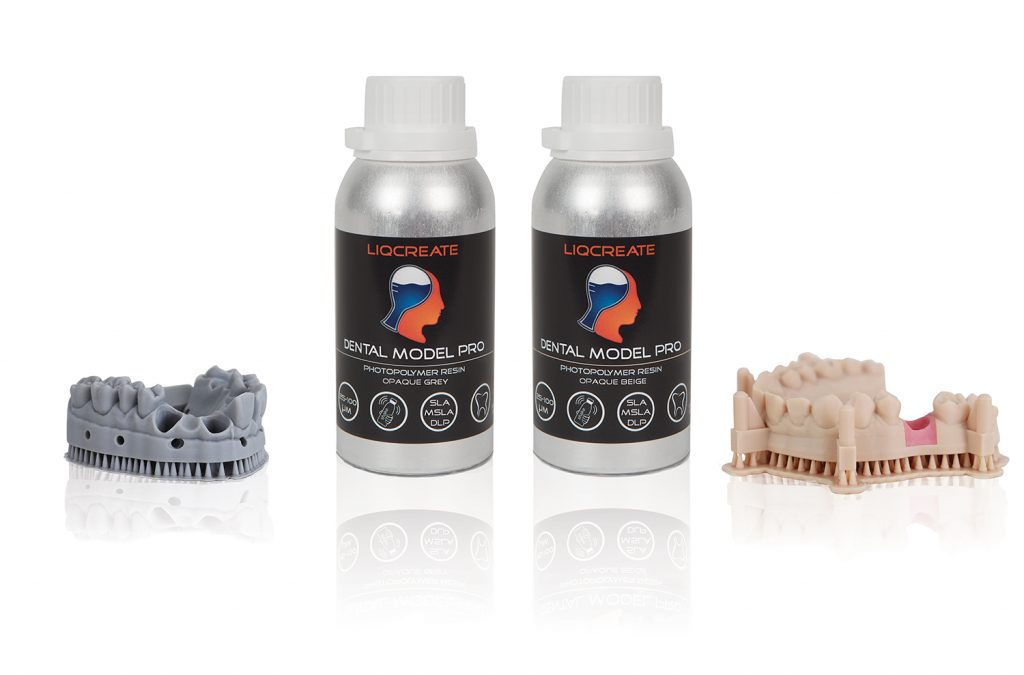
Dental resin accuracy is driven by resin formulation, polymerization behavior, optical properties and shrinkage. These scientific factors determine how closely printed parts match the intended geometry. By understanding resin behavior and selecting the correct material for each indication, dental labs can achieve predictable accuracy across restorative, orthodontic and implant applications.
This article is part of the Resin Science and Accuracy structure and connects to the broader resin selection framework within the Dental resins page and the Resin Comparison and Buyer Guides.
Support
Do you need any help with 3D printing our SLA, DLP or LCD resins? We can help you! Just look for the question you have below. If you can’t find it, let us know by contacting us!
