
Dental resins behave differently depending on the type of light engine used in the 3D printer. Light intensity, wavelength, pixel structure, optical uniformity and projection method all influence how the resin absorbs energy, how deeply it cures and how accurately it reproduces fine dental features. Understanding these interactions is essential for achieving predictable accuracy in restorative, orthodontic and implant applications.
This article is part of the Resin Science and Accuracy structure and explains how resin chemistry interacts with LCD, MSLA and DLP light engines. For a complete overview of all dental resins, visit the Dental resins overview. For related scientific topics, see the Resin Science and Accuracy page.
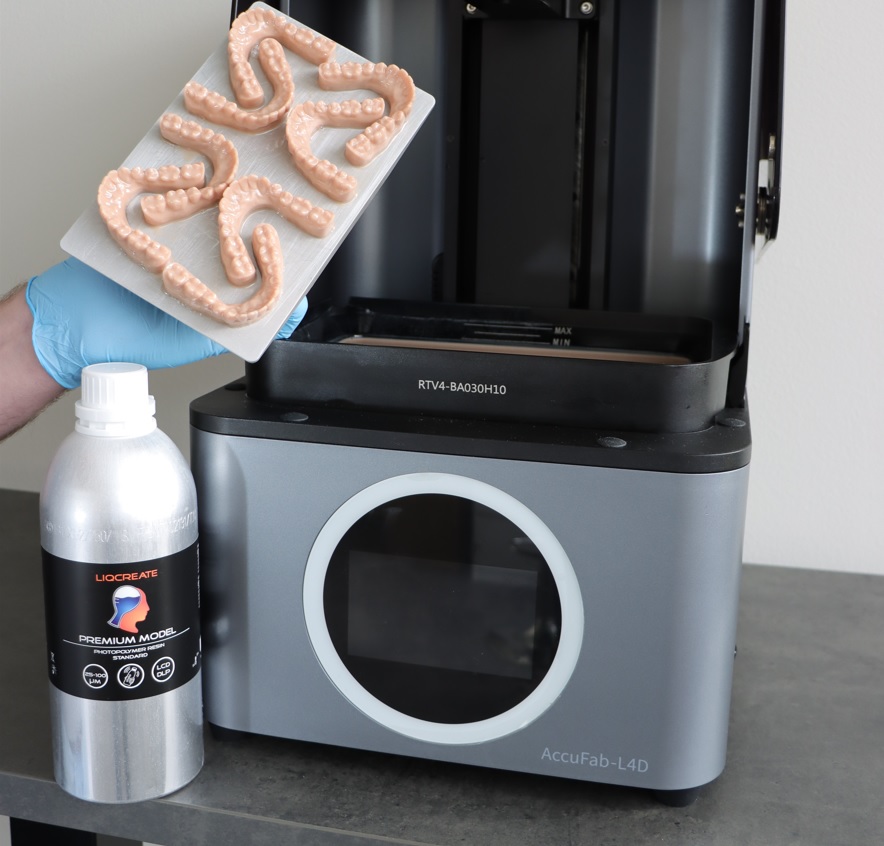
Why light engine type influences resin behavior
Each light engine delivers energy to the resin in a different way. LCD and MSLA systems use a masked light source with pixel based exposure, while DLP systems project a full image using a digital micromirror device. These differences affect cure depth, lateral curing, pixel bleed, edge sharpness and dimensional stability.
Because dental resins contain pigments, fillers and photoinitiators with specific absorption characteristics, the interaction between resin and light engine determines how accurately the material forms layers and stabilizes during polymerization.
Resin behavior under LCD and MSLA light engines
LCD and MSLA printers use a UV backlight that passes through an LCD panel to create the exposure pattern. This results in pixel based curing with distinct optical characteristics.
- Pixel structure: square pixels create stepped edges that can influence margin sharpness and small feature accuracy.
- Light uniformity: backlight uniformity affects cure depth consistency across the build plate.
- Scattering behavior: resins with higher scattering may show more lateral curing and reduced detail sharpness.
- Cure depth sensitivity: LCD systems often require slightly higher exposure due to light loss through the panel.
These effects vary by resin formulation. For resin specific handling and curing parameters, refer to the Dental resin instructions page.
Resin behavior under DLP light engines
DLP printers project a full layer image using a digital micromirror device. This creates sharper edges and more concentrated light delivery, which influences resin behavior in several ways.
- Higher optical efficiency: more energy reaches the resin, often requiring lower exposure times.
- Sharper edges: projected pixels create cleaner margins and improved fine detail reproduction.
- Reduced pixel bleed: less lateral curing compared to LCD systems, improving dimensional accuracy.
- Wavelength sensitivity: some DLP systems use narrow spectrum LEDs that interact differently with resin pigments.
Because DLP systems deliver energy more efficiently, resins may show different shrinkage behavior compared to LCD systems. For printer specific information and compatibility, see the Dental 3D printers overview.
Optical interaction between resin and light engine
Resin behavior is strongly influenced by how light interacts with pigments, fillers and photoinitiators. These interactions determine cure depth, lateral curing and polymerization uniformity.
- Absorption: pigments absorb specific wavelengths, influencing how deeply light penetrates the resin.
- Scattering: fillers scatter light, affecting edge sharpness and fine detail reproduction.
- Photoinitiator response: different initiators respond differently to LCD and DLP wavelengths.
- Thermal behavior: concentrated DLP exposure can create localized heat that influences polymerization kinetics.
These optical mechanisms explain why the same resin may require different exposure settings on different printers. For broader workflow context, refer to the Dental workflows page.
Accuracy implications for dental applications
The interaction between resin and light engine has direct consequences for dental accuracy. Margin lines, contact points, implant analog interfaces and aligner model details all depend on predictable curing behavior.
- LCD and MSLA: may show more lateral curing, affecting sharp margins and small internal features.
- DLP: typically produces sharper edges but may require tighter exposure control to avoid over curing.
- High detail resins: benefit from DLP projection due to improved pixel definition.
- Model resins: often perform consistently across both systems but require calibration per printer family.
For indication based material selection aligned with accuracy requirements, refer to the Resin Comparison and Buyer Guides.
How to evaluate resin behavior across light engines
Labs can evaluate resin behavior by printing standardized test geometries on both LCD and DLP systems. Differences in margin sharpness, hole accuracy, bar thickness and surface texture reveal how the resin responds to each light engine.
- Print calibration plates on both systems and compare feature definition.
- Evaluate cure depth using step exposure patterns.
- Check lateral curing by measuring small internal features.
- Validate clinical models such as dies, implant models or aligner models.
For detailed calibration tools and accuracy checks, see the Printer Accuracy and Calibration overview.
Dental resins behave differently under LCD, MSLA and DLP light engines due to variations in light delivery, wavelength, pixel structure and optical efficiency. These differences influence cure depth, lateral curing, edge sharpness and dimensional stability. By understanding how resin chemistry interacts with each light engine, dental labs can optimize exposure settings, select suitable materials and achieve predictable accuracy across restorative, orthodontic and implant applications.
This article is part of the Resin Science and Accuracy structure and connects to the broader calibration and workflow content in the Printer Accuracy and Calibration page, the Dental workflows overview and the Dental 3D printers overview.
Support
Do you need any help with 3D printing our SLA, DLP or LCD resins? We can help you! Just look for the question you have below. If you can’t find it, let us know by contacting us!
