
Choosing the correct resin is one of the most critical decisions in a dental 3D printing workflow. Different indications such as crown and bridge models, implant analog models, aligner models, gingiva masks, castable parts and trays require specific mechanical properties, color, accuracy and processing behavior. This sub hub provides structured resin comparison and buyer guides to help dental labs select the most suitable resin for each application and printer family.
The articles linked from this page combine technical data, lab tested performance and workflow considerations. They are designed to support purchasing decisions, standard operating procedure development and communication between dental labs, clinics and production centers.
- Overview of dental resin families and indications
- Comparison guides for model, gingiva, castable and tray resins
- Selection criteria based on accuracy, color and handling
- Integration with printer settings and shrinkage compensation
- Links to detailed resin instructions and workflow articles
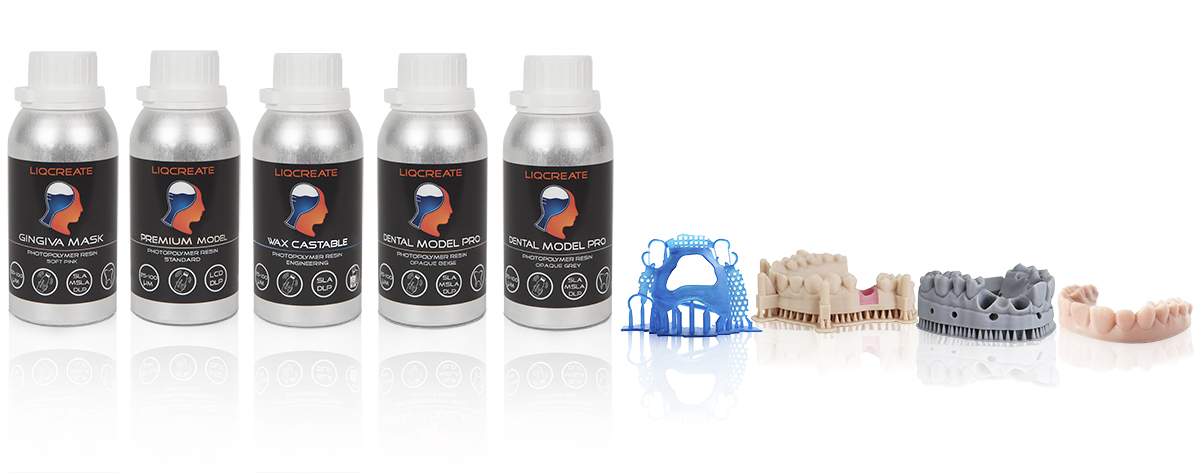
How to use the resin comparison and buyer guides
The comparison and buyer guides in this sub hub are organized by indication and use case. Each guide explains the relevant resin options, their key properties and how they behave in validated workflows. Labs can use these guides to align material choices with clinical requirements, printer capabilities and existing protocols.
- Start from the indication specific comparison guide that matches your application.
- Review the summarized properties and recommended use cases for each resin.
- Follow the links to detailed instruction pages for processing parameters.
- Combine material selection with printer settings and shrinkage data.
For a complete overview of all dental resins, see the Dental resins hub. For resin specific processing instructions, see the Dental resin instructions hub.
Dental model resin comparison guides
Dental model resins are used for crown and bridge models, implant analog models, aligner models and diagnostic models. Different resins offer variations in color, surface finish, abrasion resistance and accuracy. The model resin comparison guides explain how these differences affect daily lab work and which resin is best suited for each indication.
- Dental model resin comparison guide – compares model resins for crown and bridge, implant and aligner workflows.
- Premium Model instructions – beige model resin for crown and bridge and aligner models.
- Dental Model Pro instructions – high accuracy model resin for implant and diagnostic models.
Use these guides together with printer specific settings from the Dental 3D printers hub and dimensional behavior data from the Shrinkage Compensation Database.
Gingiva mask resin comparison guides
Gingiva mask resins are used to simulate soft tissue around implants and subgingival areas. Color, flexibility and tear resistance are key properties. The gingiva comparison guides explain how different gingiva resins behave in implant model workflows and how they integrate with model resins.
- Gingiva resin comparison guide – compares gingiva materials for implant and restorative workflows.
- Gingiva Mask instructions – flexible gingiva resin for implant models.
For complete implant model workflows that combine model and gingiva resins, see the Dental workflows hub.
Castable resin comparison guides
Castable resins are used for burnout patterns in dental casting workflows. Key properties include clean burnout behavior, surface quality and dimensional stability. The castable resin comparison guides help labs choose the correct resin for crowns, bridges and partial frameworks.
- Castable resin comparison guide – compares castable materials for dental casting workflows.
- Wax Castable instructions – castable resin for crowns, bridges and partial frameworks.
For shrinkage behavior and compensation strategies in castable workflows, see the Shrinkage Science hub and the Shrinkage Compensation Database.
Tray and appliance resin comparison guides
Tray and appliance resins are used for custom impression trays and other chairside devices. Stiffness, biocompatibility and processing behavior are important selection criteria. The tray resin comparison guides explain how different tray materials perform in validated workflows.
- Tray resin comparison guide – compares tray materials for custom impression trays and related applications.
- Tray instructions – tray resin for custom impression trays.
For printer specific validation of tray workflows, see the relevant articles in the Dental 3D printers hub.
Selection criteria for dental resin buyers
When selecting a resin, dental labs should consider more than just indication. Accuracy, surface quality, color, handling, curing behavior and compatibility with existing equipment all influence the final result. The buyer guides in this sub hub highlight these criteria and link them to specific materials and workflows.
- Required indication and clinical use case.
- Printer technology and validated settings.
- Desired color and surface appearance.
- Accuracy and shrinkage behavior.
- Post processing requirements and available equipment.
For detailed printer and accuracy information, see the Printer Accuracy and Calibration hub and the Dental 3D printers hub.
Linking resin selection to workflows and validation
Resin selection should always be considered in the context of complete workflows and validation. A resin that performs well in one workflow may require different settings or post processing steps in another. The comparison and buyer guides in this sub hub are therefore linked to workflow articles, printer settings and shrinkage data.
To build a robust, validated dental 3D printing workflow, combine the information in this sub hub with the articles in the Dental 3D printing knowledge center, the Dental workflows hub, the Shrinkage Science hub and the Shrinkage Compensation Database.
The Resin Comparison and Buyer Guides sub hub provides a structured foundation for selecting dental 3D printing resins based on indication, printer capabilities and workflow requirements. By combining these guides with resin specific instructions, validated printer settings, shrinkage data and workflow documentation, dental labs can make informed material choices and build stable, predictable digital dentistry workflows that deliver consistent accuracy across multiple applications.
Support
Do you need any help with 3D printing our SLA, DLP or LCD resins? We can help you! Just look for the question you have below. If you can’t find it, let us know by contacting us!
