
The Resin Science and Accuracy article provides an overview of the scientific principles that govern dental 3D‑printing resins. Understanding resin chemistry, dimensional behavior and accuracy‑related factors is essential for achieving predictable results in restorative, orthodontic and implant workflows. This article connects all accuracy‑focused resources related to dental resin performance.
Dental resins behave differently depending on their formulation, exposure characteristics, curing behavior and interaction with printer hardware. These factors influence dimensional accuracy, surface quality, mechanical strength and long‑term stability. This page helps dental labs understand how resin science affects real‑world performance across different dental applications.
- Dimensional accuracy and resin behavior
- Stability during printing, washing and curing
- Mechanical properties and deformation resistance
- Calibration and validation requirements
- Links to accuracy related resin and workflow documentation
For a complete overview of all dental resins, visit the Dental resins overview. For indication based resin selection, see the Resin Comparison and Buyer Guides.
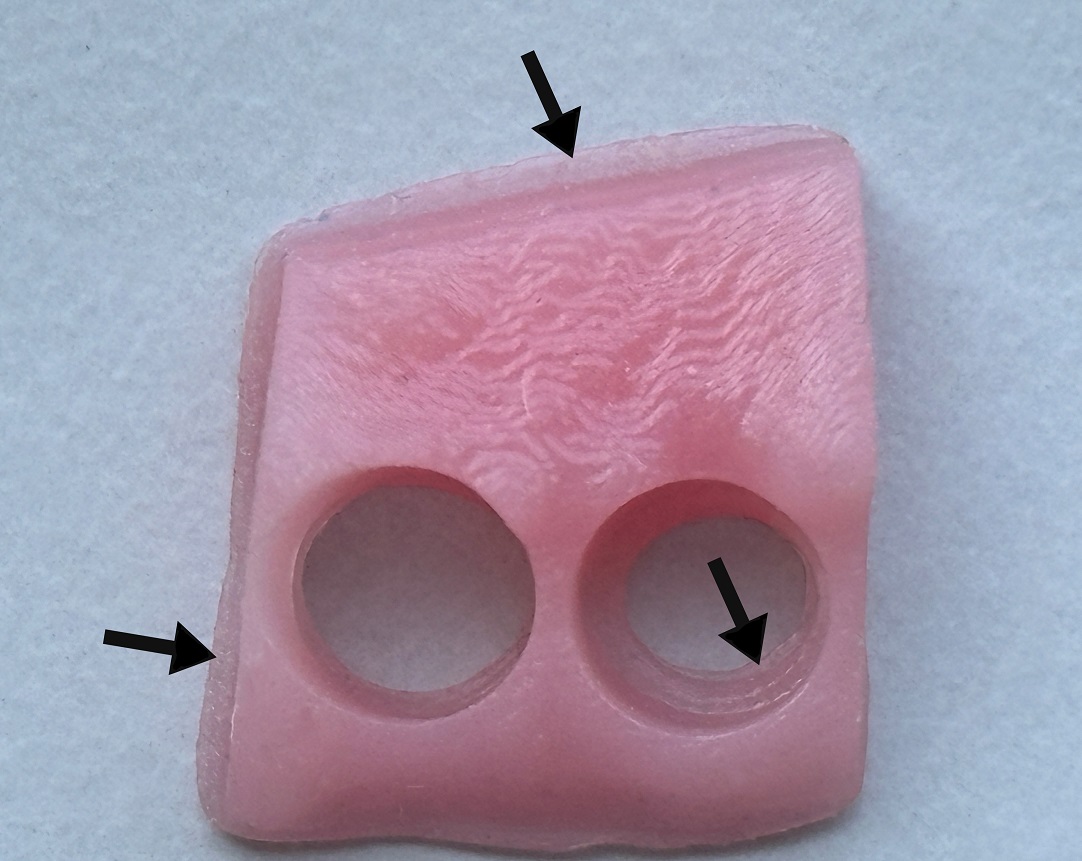
Dimensional accuracy and resin behavior
Dimensional accuracy depends on resin formulation, exposure response and curing behavior. Small variations in polymerization can influence margins, contacts and implant interfaces. Understanding these factors helps labs choose the correct resin for each indication.
- Model resins for stable restorative and orthodontic models. See Best Resin for Dental Models.
- Precision model resins for fine detail and margin reproduction. See Best precision model resin for dental labs.
- Implant model resins for analog fit and mechanical stability. See Best implant model resin for dental labs.
Stability during printing and post processing
Resin stability affects dimensional consistency throughout printing, washing and curing. Predictable behavior is essential for accurate restorative and implant workflows. For resin specific handling and curing parameters, refer to the Dental resin instructions overview.
Calibration and accuracy validation
Accuracy is influenced by printer calibration, exposure settings and workflow alignment. Even high accuracy resins require proper validation to achieve consistent results.
- Validate accuracy using the Printer Accuracy and Calibration article.
- Use validated scanning, design and printing workflows from the Dental workflows page.
- Confirm resin compatibility with your printer family in the Dental 3D printers overview.
How resin science supports clinical indications
Different indications require different accuracy profiles. Resin science determines how materials behave under mechanical load, thermal stress and repeated handling.
- Restorative models require stable dimensions and smooth surfaces.
- Crown and bridge work requires sharp margin reproduction.
- Implant workflows require stable analog seating and deformation resistance.
Resin science determines how dental materials behave during printing, washing, curing and long term use. By understanding dimensional behavior, mechanical properties and calibration requirements, dental labs can achieve predictable accuracy across all indications. This section provides the scientific context needed to interpret resin comparison and selection resources, focusing on how material behavior affects clinical indications.
Support
Do you need any help with 3D printing our SLA, DLP or LCD resins? We can help you! Just look for the question you have below. If you can’t find it, let us know by contacting us!
