
Shrinkage Science provides a complete technical foundation for understanding dimensional behavior in dental 3D printing. This page explains the scientific mechanisms behind contraction, polymerization and curing behavior, and connects all related shrinkage articles within the shrinkage silo. It supports dental labs in achieving predictable geometry, stable seating accuracy and consistent dimensional performance across validated printer and resin combinations.
Navigation
- How Shrinkage Compensation Works
- How to Test Shrinkage in Dental Models
- Best Practices for Dimensional Accuracy
- Why Dental Models Shrink
- How Printer Resolution Affects Shrinkage
Scientific Context
Shrinkage behavior in dental 3D printing is driven by resin polymerization, light exposure characteristics and mechanical stability. These factors interact to produce predictable dimensional changes that influence the accuracy of dental models, dies, implant analog seating and orthodontic appliances. Understanding these mechanisms is essential for maintaining dimensional fidelity during daily production.
Polymerization begins when photoinitiators absorb energy and trigger cross linking. As monomers convert into a solid network, contraction occurs. The degree of contraction depends on resin chemistry, viscosity, cross linking density and curing profile. Controlled exposure ensures uniform polymerization, reducing localized contraction and improving dimensional stability.
Light engines influence shrinkage through pixel or voxel energy distribution. Uniformity across the build plane determines how evenly layers cure. Variations in energy output can create localized expansion or contraction, affecting horizontal accuracy. High resolution engines produce finer voxel structures, which can improve dimensional consistency when paired with stable exposure settings.
Mechanical systems contribute to shrinkage behavior through Z axis rigidity, platform movement and lift mechanics. Any variation in vertical movement can influence layer stacking accuracy. Stable mechanical performance ensures consistent layer height, reducing vertical dimensional drift. Lift speeds and platform stability also influence resin flow and curing behavior.
Post curing introduces additional dimensional change. As polymerization continues under controlled light exposure, the model reaches its final mechanical properties. Post curing behavior depends on resin chemistry, curing time and energy distribution. Predictable post curing ensures stable final geometry.
Dimensional Behavior Factors
These dimensional behavior factors describe how resin chemistry, light exposure and mechanical performance interact to create predictable contraction patterns that influence the final accuracy of dental 3D printed models.
- Resin interaction: polymerization kinetics, viscosity behavior and cross linking density influencing contraction patterns.
- Light engine behavior: uniformity of pixel or voxel energy distribution determining curing consistency and horizontal accuracy.
- Mechanical stability: Z axis rigidity, platform movement and lift mechanics affecting vertical dimensional behavior.
- Exposure strategy: layer exposure time, lift speeds and curing profiles influencing cross layer consistency.
- Accuracy behavior: predictable contraction patterns observed during controlled model production workflows.
- Calibration routines: neutral workflows used to validate shrinkage behavior and compensation values for each printer model.
- Troubleshooting patterns: identifying deviations caused by incorrect exposure, resin aging, mechanical drift or curing inconsistencies.
- Workflow integration: applying shrinkage insights during dental model production to maintain dimensional fidelity.
Detailed Shrinkage Mechanisms
Shrinkage begins at the moment of exposure. As resin transitions from liquid to solid, molecular distance decreases. This contraction is influenced by resin formulation, photoinitiator concentration and curing depth. Controlled exposure ensures uniform polymerization across each layer, reducing localized contraction.
Horizontal shrinkage is influenced by pixel or voxel distribution. Engines with stable energy output produce consistent curing behavior across the build plane. Variations in energy distribution can create uneven contraction, affecting model width and internal geometry. High resolution engines can reduce these effects when paired with stable exposure settings.
Vertical shrinkage is influenced by Z axis movement and layer stacking accuracy. Any variation in vertical movement can introduce dimensional drift. Stable mechanical systems ensure consistent layer height, reducing vertical contraction. Lift mechanics influence resin flow and curing behavior, affecting vertical dimensional stability.
Post curing introduces additional contraction as polymerization continues. Controlled post curing ensures predictable final geometry. Resin chemistry determines how much additional contraction occurs during post curing. Predictable post curing behavior ensures stable final dimensions.
Scientific Importance for Dental Applications
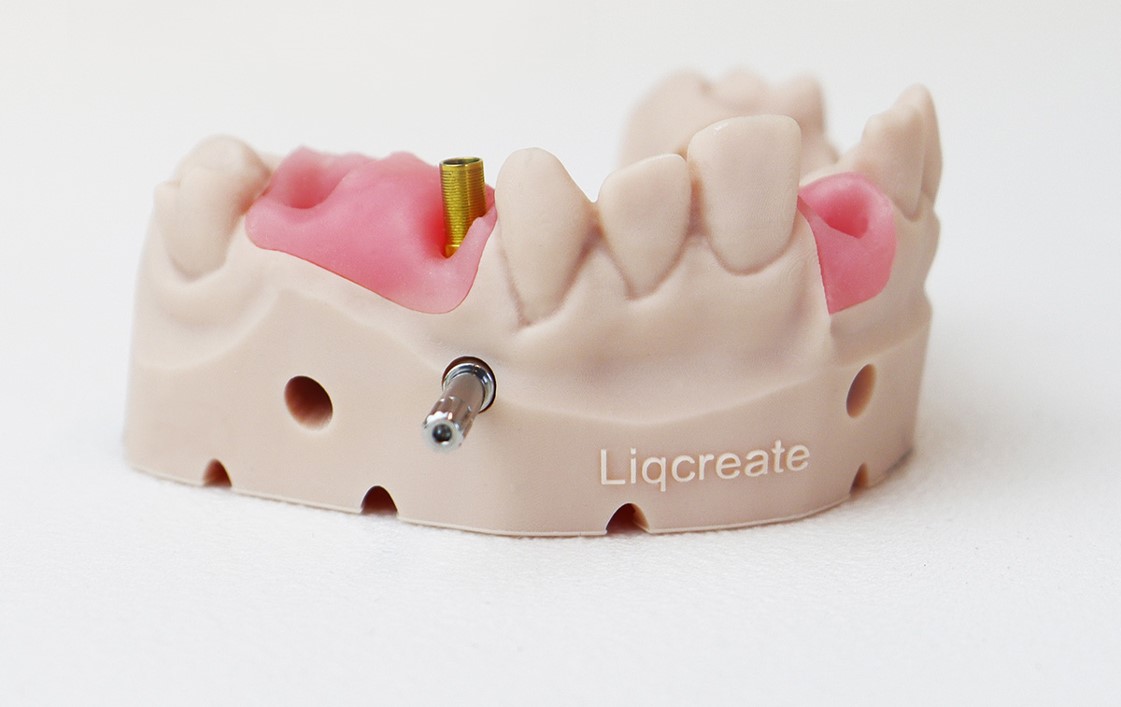
Shrinkage science is essential for dental applications requiring tight tolerances. Removable dies rely on stable seating accuracy. Implant analog models require precise geometry to ensure correct analog placement. Orthodontic models require consistent dimensional behavior to maintain aligner fit. Diagnostic models require predictable geometry for clinical evaluation.
Understanding shrinkage mechanisms allows dental labs to maintain consistent fit and repeatability across different printer platforms. Shrinkage insights support calibration routines, exposure strategies and workflow integration. Predictable shrinkage behavior ensures reliable daily production.
Integration With Dental Workflows
Shrinkage science supports downstream workflows such as Dental Model Production, Implant Models and Orthodontic Models by providing predictable dimensional baselines for resin specific and printer specific behavior. By combining shrinkage insights with stable exposure calibration, dental labs can maintain consistent fit, seating accuracy and repeatability across different printer platforms. Shrinkage science ensures reliable daily production and supports high accuracy dental workflows.
Support
Do you need any help with 3D printing our SLA, DLP or LCD resins? We can help you! Just look for the question you have below. If you can’t find it, let us know by contacting us!
